A new legal AI clinic, Conclusive, has launched to provide fixed price litigation help for SMBs – so far so good. But the key thing is that they welcome what many call ‘AI slop’, e.g. claims and other documents generated by general LLMs, which may be far from bona fide legal work.
While some lawyers find it amusing that LLMs produce sometimes quite awful ‘legal-ish’ outputs, AI slop is becoming a serious issue, with courts and inhouse legal teams experiencing a flood of pseudo-legal documents sent with full confidence by individuals and small companies on the basis that ChatGPT told them it was right. Law firms also report receiving great dollops of AI slop, sometimes from major clients, with an attached note saying: ‘Look, I’ve done most of the work for you already with AI. Can you just finish it off?’
UK-based founder, Jessica Fitzgerald, told Artificial Lawyer: ‘Reviewing, verifying and correcting AI-generated documents is our core service, because it’s one of the fastest-growing problems in the legal system. People are already using AI to draft their own letters, contracts and court documents, and errors or invented case law can lead to adverse costs orders.’

In this case, Conclusive is specialising in civil and commercial litigation disputes including claims above the £10,000 small claims limit, and up to £100,000 – and is regulated by the SRA in England & Wales.
Every claim begins with a qualified lawyer call, and then the matter is supported by proprietary AI-powered document review technology. Plus they have professional indemnity insurance for individuals, sole traders and SMBs, they said.
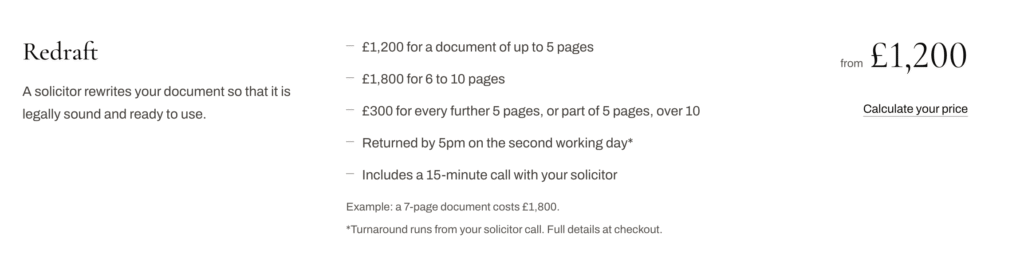
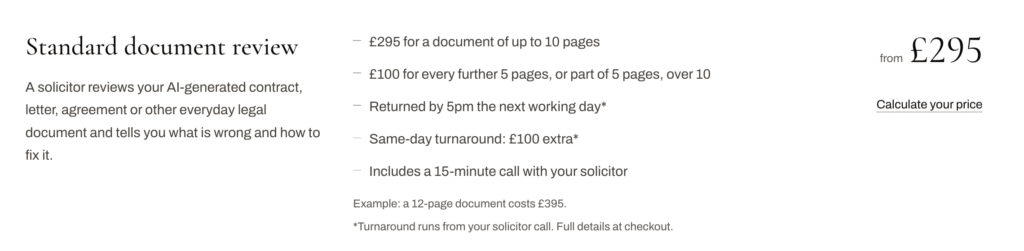
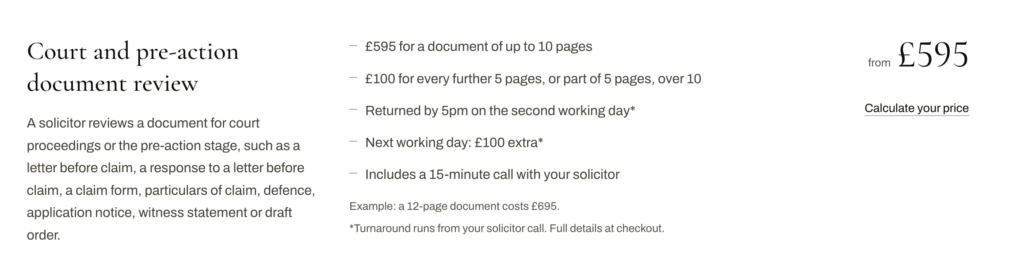
Fitzgerald continued: ‘We manage quality and volume in three ways. Every instruction starts with a call with a solicitor, so we understand the facts before reviewing anything. Our own review engine then checks the document against court rules, verified case law and common errors, so the solicitor’s time goes on judgement rather than proofreading.
‘And our fees are fixed by length and complexity, so a poor document doesn’t become an open-ended cost for us or the client. Where a document is beyond saving, we tell the client and offer a solicitor redraft instead.
‘We also warn clients not to put confidential or sensitive case details into public AI tools. Doing so risks losing confidentiality, and with it legal privilege, which could mean that information is disclosable later.’
In terms of the tech they use, there are a range of off the shelf tools and customised ones: ‘At the centre is our own document review engine, which we designed and built with our developers, drawing on our litigation knowledge base of authorities, court rules and procedure. It runs on Anthropic’s Claude.
‘We also use Thomson Reuters CoCounsel for legal research and verification, and our case management system, LEAP, has built-in AI tools. Whatever the tool, every document is reviewed and signed off by a qualified solicitor before it reaches the client, the court or the other side,’ they concluded.
Overall, a very significant move. Why? Because, as noted, legal AI slop is growing rapidly.
AI has offered SMBs and the public in general the chance to increase their access to justice and get a start on legal documents that normally would be prohibitively expensive. So, that’s the good part.
The not so good part is that those documents are often wrong, or so turgid and unlike anything a lawyer working in a certain field would expect, e.g. employment or commercial property, that they have to spend hours unpicking what has been sent.
The legal sector globally needs to find a solution. This looks to be one way of handling the phenomenon.
You can find more about Conclusive here.
—
Discover more from Artificial Lawyer
Subscribe to get the latest posts sent to your email.