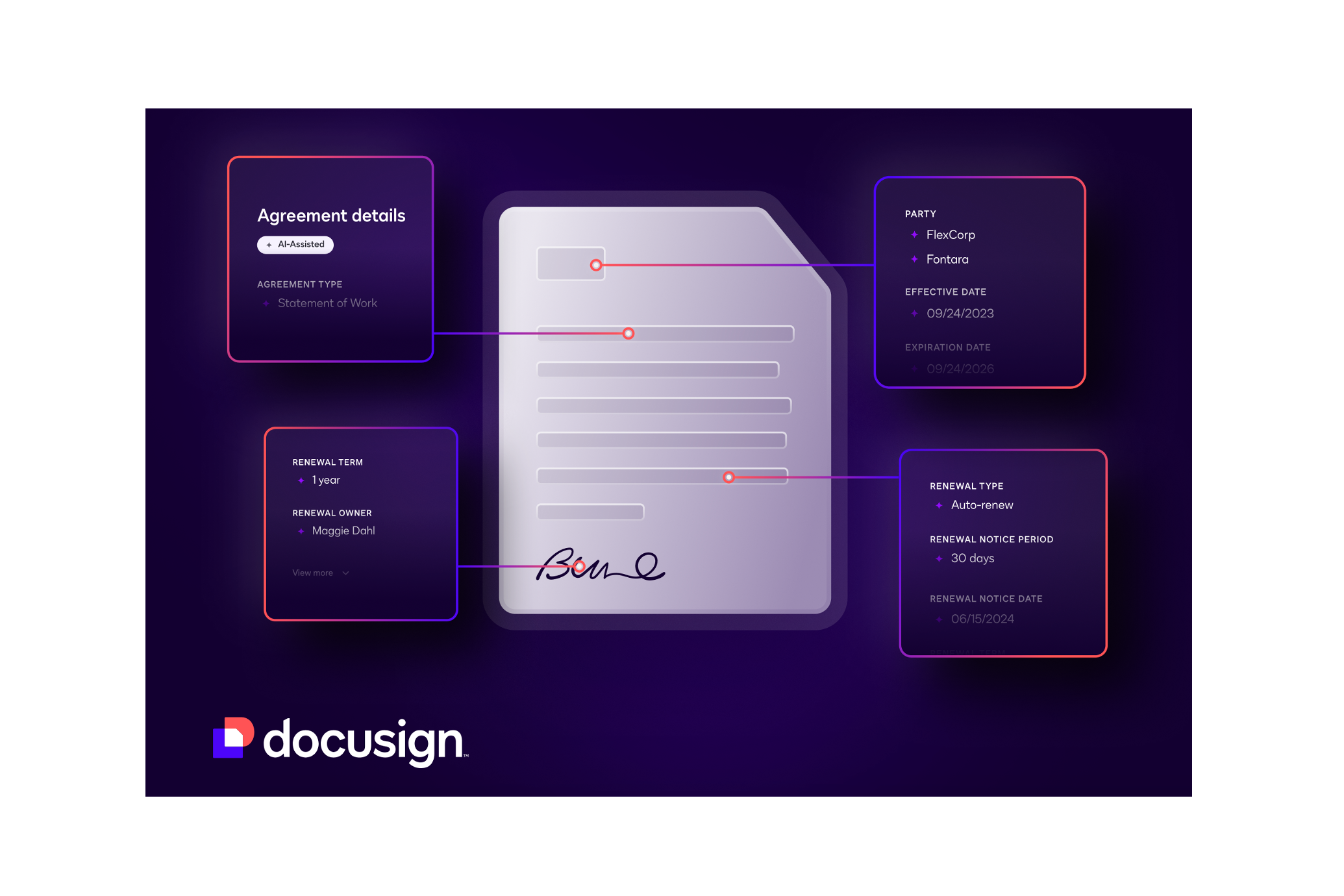
By Ken Priore, Deputy General Counsel, Docusign.
Agentic AI has arrived for agreements. Software no longer only drafts a clause or flags a risk for a person to weigh. It is beginning to negotiate, decide, and act inside the workflows where commitments are made. The conversation about that shift has been mostly about capability: whether agents can draft well, reason well, and hold their own against a skilled counterparty. But what about when an agent acts on an agreement? Is there a record of what it did, and on whose authority it acted?
The accountability gap
Imagine two agents transacting under a master agreement. One places an order and the other accepts, but the goods never arrive, or the price is wrong. How would you prove a contract was formed? Today, the answer involves log files and someone who can explain the system’s configuration. That is a long way from what commercial parties expect elsewhere in the agreement process.
This is a gap. Audits depend on internal controls around contracting: assurance that whoever committed the company had the authority to commit it, that the commitment fell inside the rules, and that its contents landed correctly in the systems that account for it. Every one of those controls assumes that, at some point, a person signed something. The question is, when an agent is the one acting, where does that control attach to?
What digital signatures solved
A version of this problem was solved on a smaller scale. Docusign’s eSignature solution includes a certificate of completion alongside executed agreements—a record of the signing process itself: who acted, when, authenticated, in what order, and sealed so that later alteration is detectable. It does not carry the substance of what was agreed; the agreement does that. What it carries is proof of how the agreement came to be executed.
We trust an agreement because someone is on the hook for it. Their signature puts them there: It fixes a commitment on a party who can then be held to it. Authentication proves the signature is theirs.
The signature is an evidentiary property: who acted, outward representation that they were empowered to bind the party they signed for, whether what they agreed to has stayed unaltered since, and when it happened. A signature also marks a moment. Before it, there is negotiation, drafts, positions, and exploration; after it, there is obligation.
When agents make the decisions
Agentic work has no marks. An agent operates as a continuous stream of actions, and nothing in the stream separates filling in a field from accepting a liability cap. Both are steps. The question is, when should an agent be able to tell a decision from a step.
Once decisions are recognizable, two more requirements may follow. First, each decision has to be traceable to the authority it was taken under and the information it was taken on. Then the traced decisions have to accumulate into a durable, attributable record that a person can stand behind. Recognition, traceability, and record, in that order. Each stage builds on the one before it.
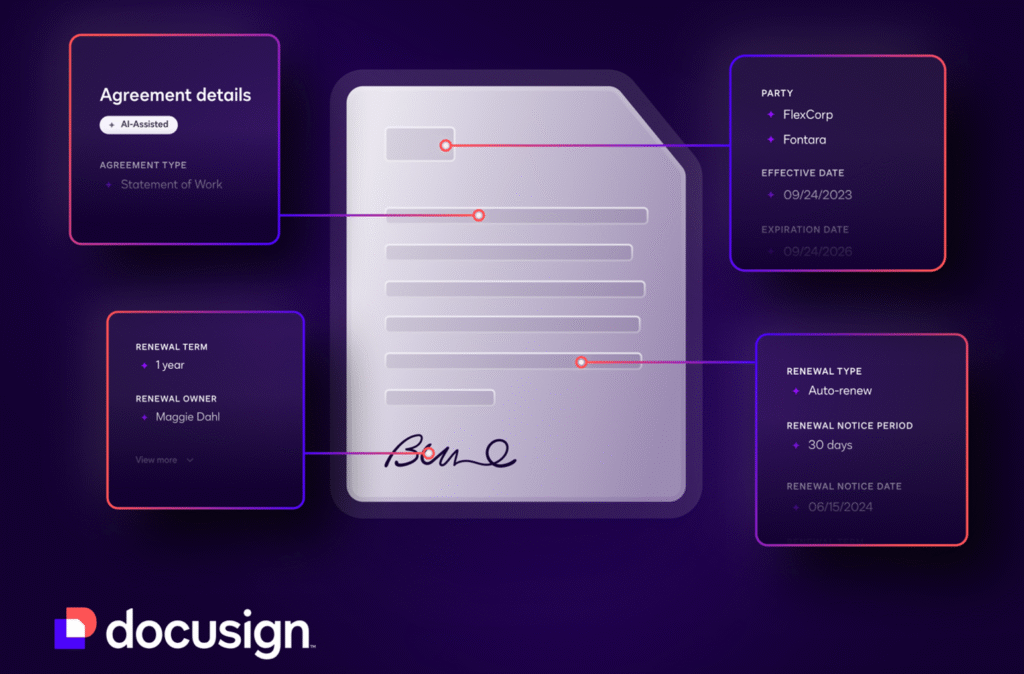
Designed for accountability
Accountability cannot be added after the fact. An audit assembled once an agent has acted is archaeology: It reconstructs a story from whatever traces happened to survive, and records that were not designed to serve as evidence are thin. Accountability as a property of the workflow is much more valuable. That is what accountability by design means: the ability to answer for an action is built into the system that takes it.
When an agent modifies a term, who authorized that scope of action, and does the record show it? The information it acted on has to be reconstructable. When an agent reaches the edge of what it is permitted to do, the record has to show that it stopped and indicate who made the next decision. And when a counterparty disputes what was agreed, the record can either settle the question or expose a documented dispute. These are design requirements, and the teams building agentic workflows into agreement processes should treat them as such while the architecture is still being built.
Accountability for agentic systems is a practice still finding its footing, and the properties are in flux as agents are still being molded.
Building agents businesses can trust
None of this removes the human. Every agreement has a signatory, a named party who carries it. Every agentic process needs a holder in the same sense—someone whose authority the work proceeded under, who answers for where it ended up. What agentic systems owe them is a record legible enough to make that holding real, because that record is what anyone on the other side will be trusting. The signing moment was the first instance of this problem. It was not the last.
The path to trusted agentic AI
For organizations beginning to put agents to work across their agreement processes, the recommendation is simple: Design for accountability from the start. Define what an agent is empowered to decide, make those decisions traceable, establish clear points for human oversight, and create a durable record of what happened and why.
At Docusign, we believe trust has to be built into every step of an agentic workflow—combining human oversight with transparent audit trails that show how agents acted and where people stepped in. As agentic AI takes on a larger role in how agreements get done, these safeguards will be critical to giving businesses the confidence to put it to work. Learn more about how Docusign is approaching agentic AI.
About the author: Ken Priore is Senior Director and Deputy General Counsel at Docusign.
—
[ This is a sponsored thought leadership article by Docusign for Artificial Lawyer. ]
Discover more from Artificial Lawyer
Subscribe to get the latest posts sent to your email.